Blog
Manhattan Residential Outlook 2026: Confidence Is Back, But the Market Is Still Judging You
Kelly Robinson
Kelly Robinson
As we head into 2026, the Manhattan residential market has found its footing. Not a frenzy. Not a freeze. A functioning market, which honestly feels refreshing.
My outlook is cautiously bullish on buyer confidence, faster on deal velocity, and still very selective on product.
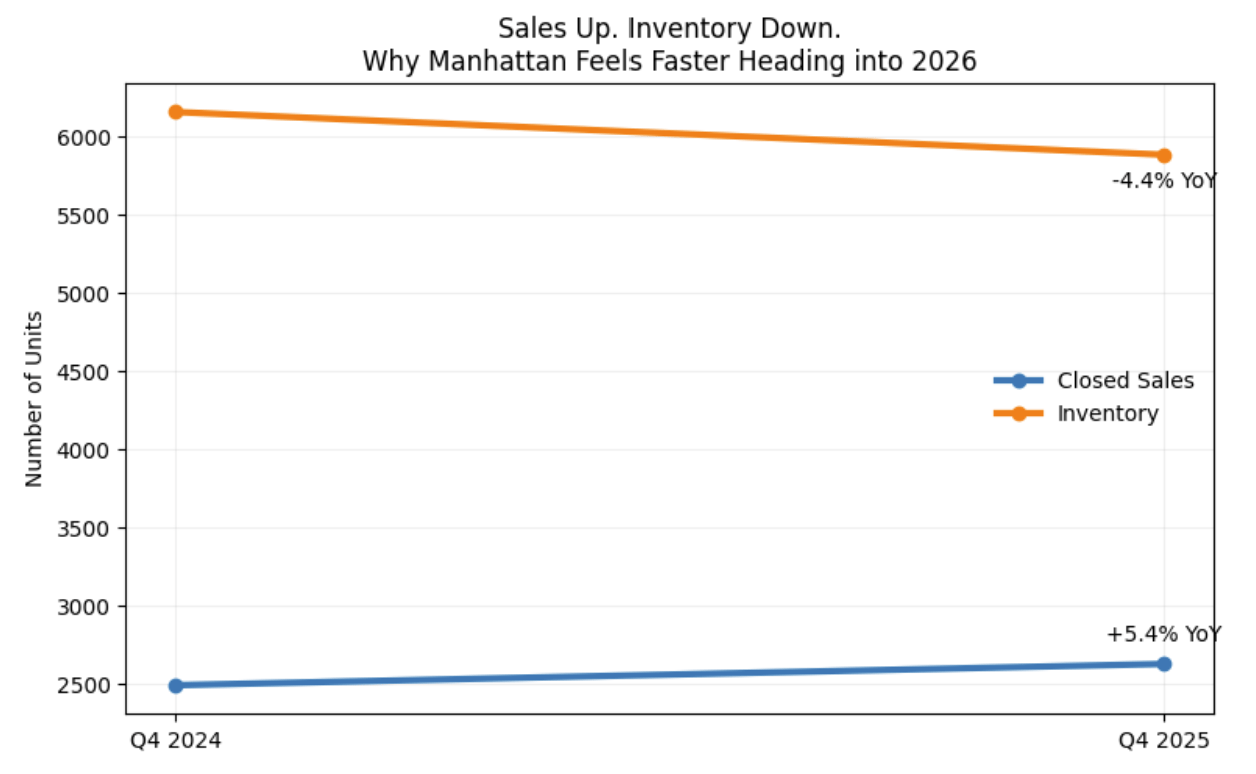
By the end of 2025, activity on the ground picked up meaningfully. Q4 closed sales rose to 2,631, up 5.4 percent year over year, while inventory fell to 5,887, down 4.4 percent, tightening months of supply to 6.7. Days on market dropped to 74, and negotiation is still alive and well, with the typical deal closing at roughly 5.1 percent below asking.
Translation: buyers are active, but they are not sentimental.
The market is moving, but only for homes that make life easier, not harder.
Well priced, easy yes apartments in prime locations are trading quickly. If a home is renovated, correctly positioned, and in a building buyers trust, it moves. If it misses on any of those, it lingers. The market is faster, but it is not forgiving.
Co ops are having a quiet comeback. Q4 co op sales rose 7 percent year over year, outpacing condos. Buyers are once again willing to deal with boards if the value is there and the location delivers. Translation: patience exists when the math makes sense.
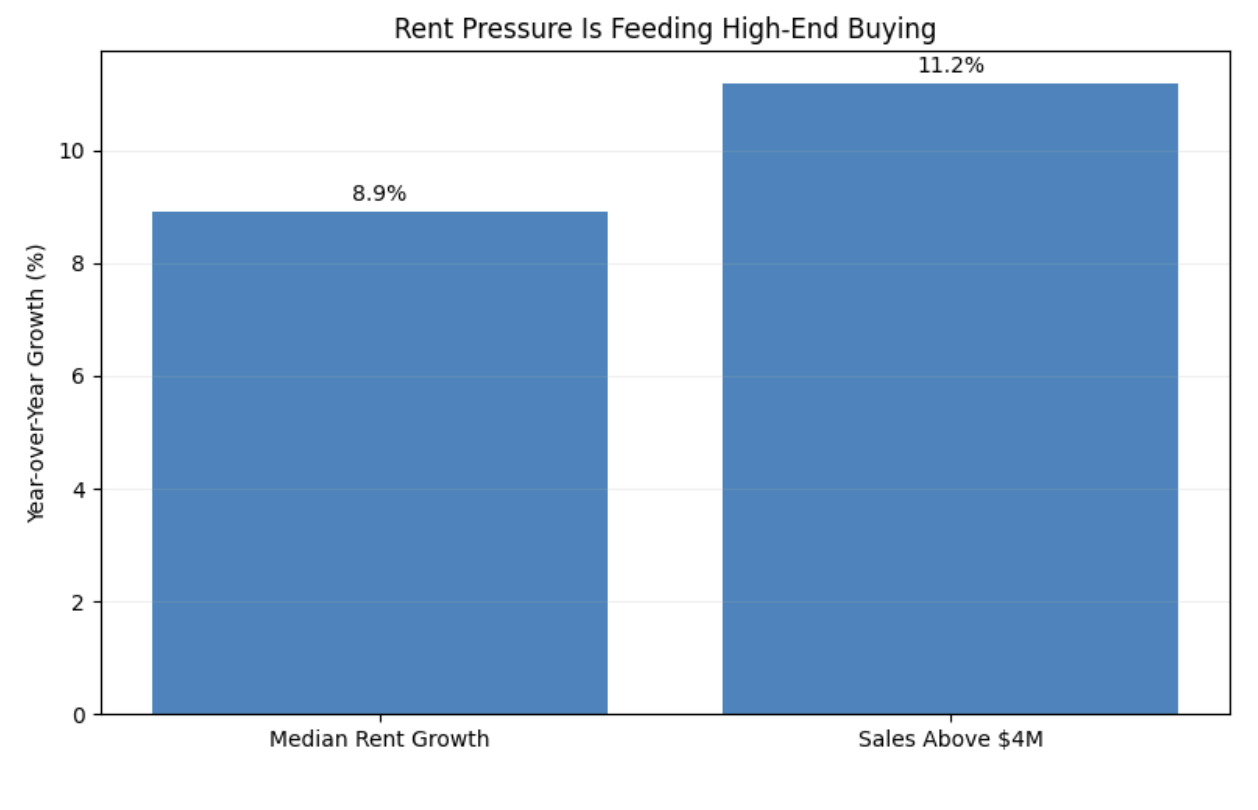
The high end is doing more of the work than headlines suggest. Sales above $4M rose 11.2 percent year over year, more than double the growth rate below $4M. The top of the market is carrying momentum, largely because it is driven by certainty.
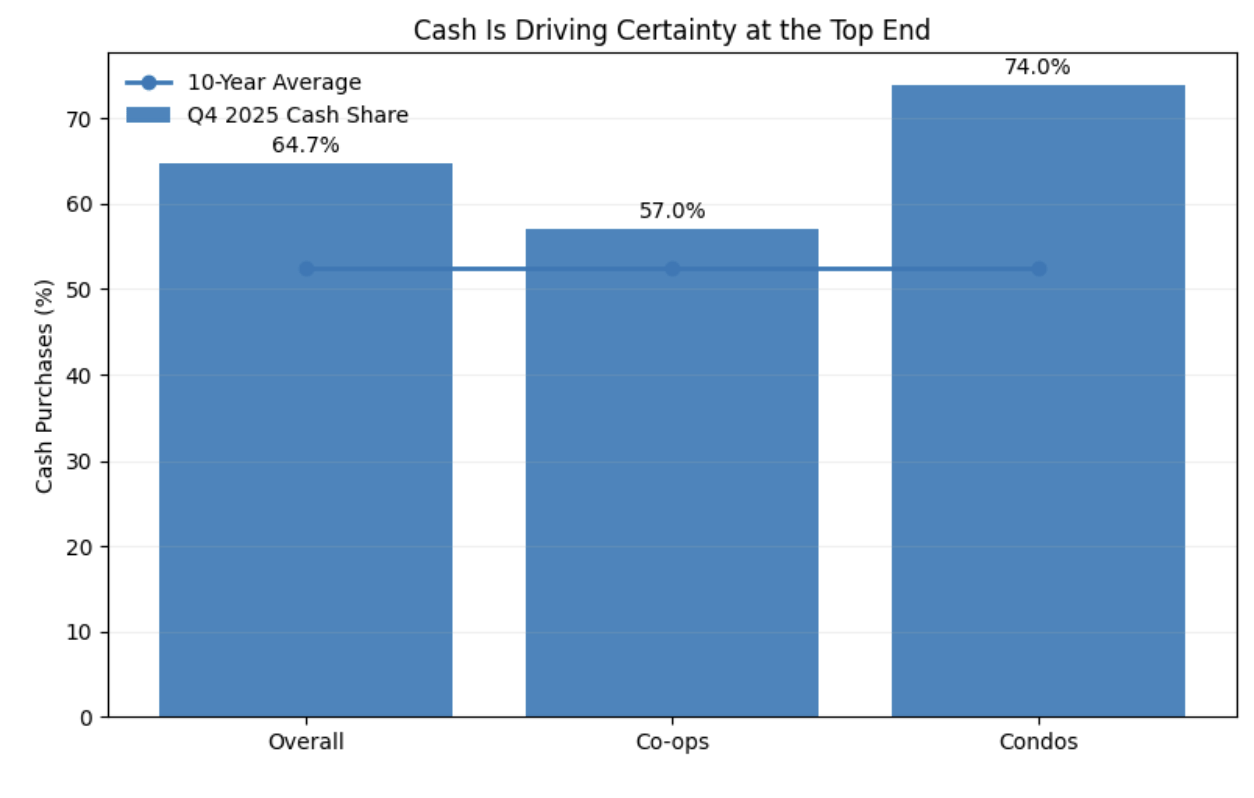
Cash remains king. In Q4, 64.7 percent of all Manhattan purchases were cash, well above the long term average. That level of liquidity keeps deals moving even when interest rates are irritating.
The simplest way to describe it:
Confidence is up because the market is functioning again. Velocity is up because inventory is down. And what is trading is anything that does not give buyers a reason to start a group chat with their attorney.
The 2026 Outperformers
In 2026, outperformance falls into two clear buckets: value with upside and scarcity with certainty.
Financial District stands out. According to StreetEasy, FiDi was ranked the top Neighborhood to Watch for 2026, with search activity up nearly 47 percent. Median asking prices remain relatively approachable by Manhattan standards, around $1.2M, while office to residential conversions and quality of life improvements are changing who actually wants to live there.
East Village and Lower East Side are also flashing early demand signals. Search growth in these areas suggests buyer interest is building before prices fully catch up. Historically, that is where opportunity lives.
Turnkey, properly sized apartments in strong buildings continue to outperform. Real two and three bedroom layouts with light, storage, and flow are winning in a market with tightening inventory. This is exactly the environment where clean product gets rewarded.
New development can also outperform, but only when it is priced to clear, not priced to impress. The Q4 median new development price dropped to $2.285M, down nearly 6 percent year over year, even as sales increased. That signals opportunity when sponsors are realistic and buyers can underwrite the building’s future.
Outperformance in 2026 is less about a magical zip code and more about two questions: does the neighborhood have a demand tailwind, and does the apartment remove friction from the buyer’s life?
Buyer Non Negotiables in 2026
Prime buyers are no longer asking for luxury. They assume it. What they are screening for now is risk, friction, and daily life quality.
If a home does not deliver on these, it is a hard no:
Great light and quiet. Buyers will forgive many things, but not living inside a drum.
Functional layouts and real storage. Not creative second bedrooms. Real ones.
Building fundamentals buyers can trust. Strong financials, a sane capital plan, competent management, and no surprise assessments lurking in the stairwell. Co op due diligence has basically become a second job.
Strong connectivity. WiFi and cell service that does not feel like a 2007 tunnel.
Move in ready, or clearly priced like a renovation. Buyers are willing to do work, but they are no longer paying retail first.
Usable outdoor space continues to drive pricing, especially terraces with depth, privacy, and good orientation.
Amenity quality now matters far more than amenity quantity. A well run gym, spa level wellness, and real service beat novelty spaces no one uses.
Air quality, sound insulation, and climate control have become real value drivers, especially as the rental market remains tight and expensive. Manhattan median rent ended December at $4,720, up nearly 9 percent year over year, pushing many renters toward buying for relief.
Low drama buildings command a premium. Brand names only help when the governance and narrative are clean. Buyers will pay more for certainty.
In 2026, buyers are not just buying an apartment. They are buying a lack of problems. Finishes matter, but the building’s balance sheet and the apartment’s livability matter more.
Check out our latest real estate listings from the team in more areas in New York City


Known for their attention to detail and collaborative work style, the One Global Advisory Team works to ensure their clients are expertly represented every step of the way.
CONTACT US